
Making Compost from Autumn Leaves and Kitchen Scraps
Shravya Mishra4 November 2026 2 min read
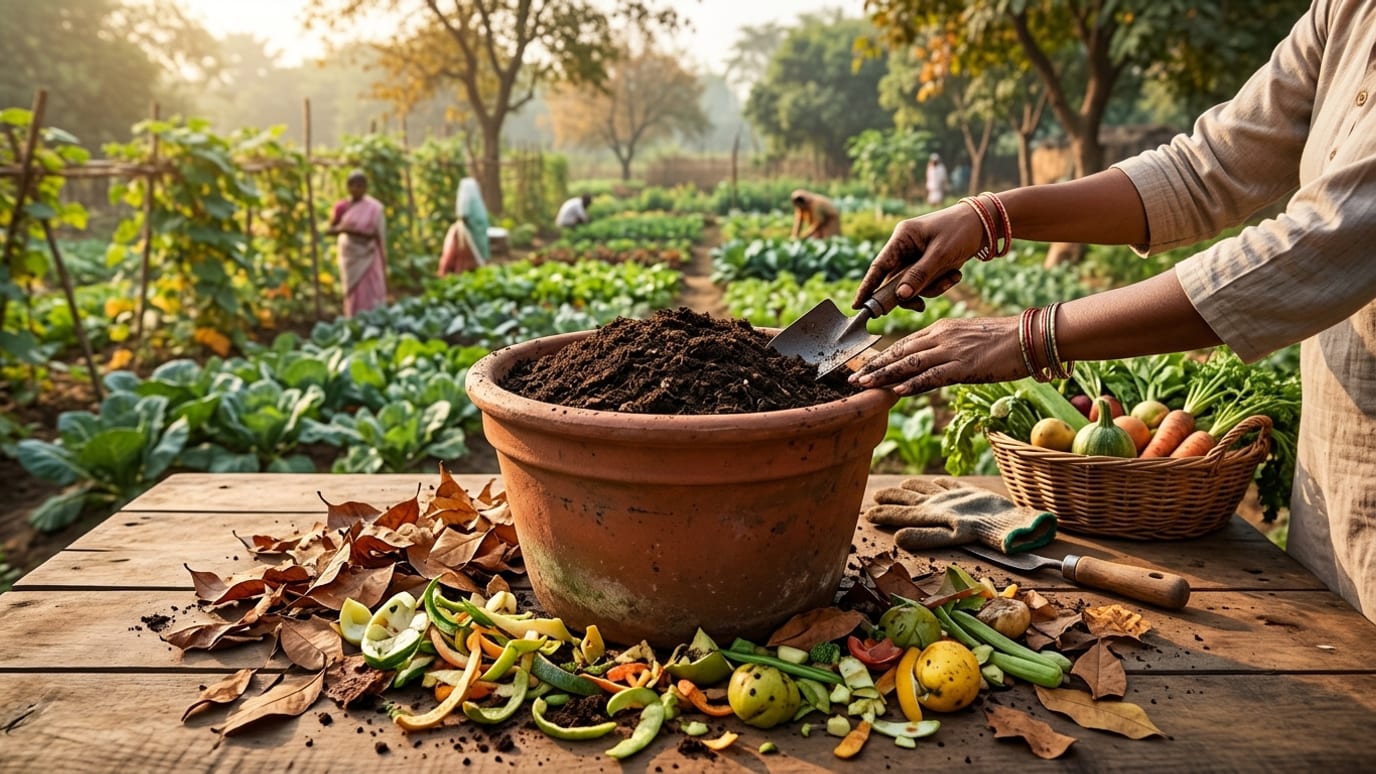
As the cooler months settle across Jharkhand, autumn brings a familiar sight to our gardens: trees shedding dry leaves, and kitchens generating daily vegetable peelings. For families leasing a plot or growing their own food near Bokaro and Dhanbad, this seasonal transition offers a natural opportunity. Instead of discarding these materials, you can combine them to create dark, crumbly compost that prepares your winter garden beds for crops like palak and methi.
Balancing Greens and Browns
Successful composting relies on a simple mix of two elements: greens and browns. Kitchen scraps such as vegetable peels, tea leaves, and fruit remnants act as your greens, providing nitrogen and moisture. Fallen autumn leaves, dried twigs, and shredded paper serve as your browns, adding carbon and structure to the pile.
To build your heap, aim for a balanced mixture. Layering dry, crunchy leaves with fresh kitchen waste prevents the pile from becoming too soggy or too dry. If you visit our farm at Sijhua, near Bokaro, you can see how we manage our own heaps to keep the decomposition process steady through the cooler weather.
Building and Turning the Pile
Start your compost heap in a shaded corner of your garden directly on bare earth, which allows beneficial soil microbes and worms to enter. Alternate a layer of dry leaves with a thin layer of kitchen scraps, sprinkling a little water if the materials feel too dry. Covering the top with an extra layer of leaves helps retain warmth and keeps unwanted pests away.
Every couple of weeks, use a fork or spade to turn the pile. This introduces oxygen, which speeds up the breakdown process and prevents unpleasant odours. Over several weeks, the materials in the middle of the pile will heat up, darken, and shrink.
Feeding Your Winter Plot
When the mixture looks dark, smells earthy, and no individual scraps are recognizable, your compost is ready. Sifting it through a large wire mesh separates any larger twigs for another round in the bin. Work this finished organic matter into your vegetable plots before planting your winter seeds.
Families who prefer a more hands-off approach can lease a plot where we sow and tend it, while you simply collect the produce. Whether you manage your own backyard heap or book a visit to the farm at Sijhua, near Bokaro, understanding how soil transforms organic waste is a satisfying part of seasonal growing.