
Making the Right Soil Potting Mix for Your Garden Plot
Shravya Mishra27 September 2026 2 min read
Why Soil Mix Matters
For families tending a leased garden plot, the foundation of every good harvest is the soil beneath your plants. Whether you are growing palak, methi, or bhindi, the potting mix dictates how well roots spread and how efficiently water is retained. A dense soil traps water and suffocates roots, while sandy soil lets moisture drain away too quickly. Creating a balanced medium means your seeds and seedlings get the right start through every local season.
The Three Essential Components
A proper potting mix relies on a balanced ratio of three main elements: structure, nutrition, and aeration.
First, you need a base of garden soil or topsoil that provides bulk. Second, organic matter is crucial for nourishment. Well-rotted farmyard manure or finished compost adds rich nutrients without any artificial inputs. Third, you need a material to keep the mixture light and porous. River sand or rice husk works well to prevent the earth from compacting into a hard brick when watered.
Getting the Proportions Right
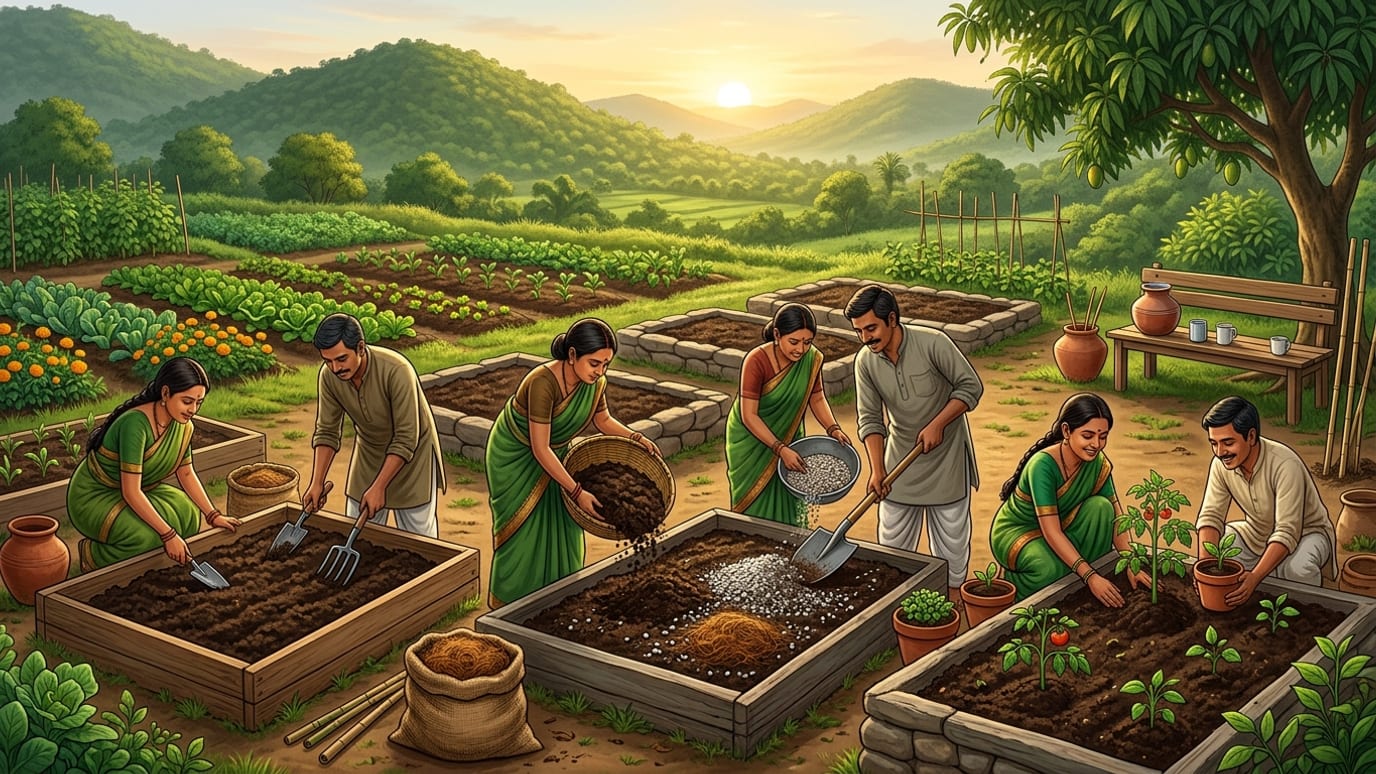
A reliable general recipe uses equal parts of garden soil, organic compost, and a coarse material for drainage. If your plot area has heavy clay soil, you will want to increase the proportion of sand and compost to loosen it up. Mix these components thoroughly in a wheelbarrow or on a tarp before filling your containers or raised beds. Breaking up any large lumps ensures that tender young roots can push through easily.
Things to Consider Before You Mix
Before you start combining materials for your plot, take a moment to look at what you plan to sow. Leafy greens like palak and methi prefer a mix with a slightly higher share of nitrogen-rich compost to support rapid leaf growth. Root vegetables need a looser, sandier texture so tubers can expand without obstruction.
Moisture retention is another vital factor, especially as the summer months approach in our region. Adding coco peat or leaf mould can help retain dampness during dry spells, reducing how often you need to water. Always inspect your compost to ensure it has fully broken down; raw manure can burn young roots and attract unwanted pests.
Maintaining Soil Health Over Time
Soil is a living system that requires care long after the initial planting. As crops grow and are harvested, they consume nutrients from the mix. Turn over the top layer gently between seasons and fold in a fresh handful of compost to replenish what the plants used. By keeping your potting mix aerated and nourished, you create a stable environment for your garden throughout the kharif and rabi growing cycles.