
Reading Your Jharkhand Garden Plot: What Bugs Tell Us
Shravya Mishra27 October 2026 2 min read
Looking Beyond the Spray Bottle
When tending a vegetable plot through our leasing option at Shravya Farms, seeing insects on your bhindi, palak, or methi can be unsettling. Families visiting us from Bokaro and Dhanbad often worry the moment they spot a bug, reaching instinctively for a remedy. Yet in an organic garden plot, many common insects are not pests to be eradicated at all. Instead, they act as living indicators, telling us a great deal about the condition of the soil and the overall vitality of the crops.
What the Insects Are Telling Us
Nature operates on balances. When certain insects appear in large numbers, they are usually responding to an imbalance in the microclimate or soil nutrition rather than just attacking a plant out of malice. For instance, aphids often multiply quickly on plants stressed by a lack of balanced nutrients or inconsistent watering. Rather than viewing the insect as the sole problem, experienced gardeners look at it as a symptom. It tells us to check the moisture levels, review our compost application, and observe the surrounding soil health.
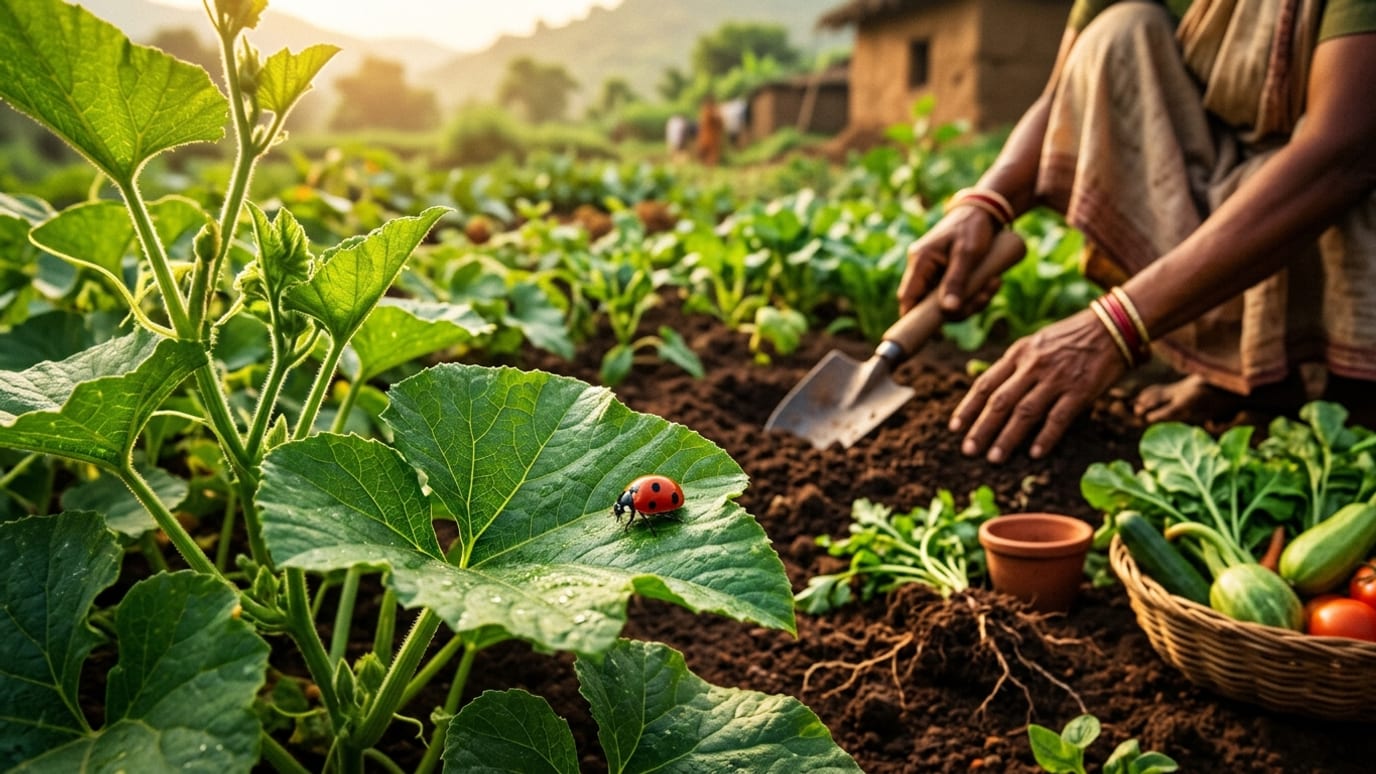
Beneficial insects also arrive when the plot hosts a diverse range of plants. Ladybugs, spiders, and lacewings make their homes where they find food, helping keep other populations in check naturally. When we avoid chemical sprays, we allow these predators to establish themselves within the kharif or rabi growing seasons.
Observing Your Plot This Season
For families who lease a plot with us, where our team sows and tends the crops for you to collect, observation is one of the greatest pleasures of gardening. Visiting our farm at Sijhua, near Bokaro, gives you a chance to see how a diverse ecosystem functions up close. You learn to read the leaves and the soil surface, understanding that a few chewed edges are simply part of an active, living outdoor space.
Instead of rushing to eliminate every crawling visitor, take a moment to watch what is happening in your patch. Notice where the insects congregate, which plants they avoid, and how the soil feels beneath your fingers. By listening to these natural signs, you develop a deeper connection to the rhythm of the land and the changing seasons in Jharkhand.